
As Chronic Conditions Scale, Generic Solutions Fall Short
Mohawk Industries, Inc., and Artemis client, wanted to understand how chronic conditions were truly showing up across their population, and whether their on-site clinic strategy was equipped to act on that insight. In this case study, you’ll see how Artemis helped them move beyond surface-level prevalence to uncover meaningful patterns and enable targeted, informed care.
Read on to:
- See how population-level data revealed where chronic conditions clustered and compounded
- Learn how deeper insight helped refine their on-site, near-site, and virtual clinic strategy
- Explore how clinicians replaced one-size-fits-all programs with precise action

Overview
Headquartered in Calhoun, Georgia, Mohawk Industries, Inc. is the world’s largest flooring company, with over 32,000 members enrolled in their U.S. benefits plan. Like many large self-funded employers, they wanted to understand how they could better manage chronic conditions like diabetes, asthma, hypertension, and others. Especially with staff dedicated to on-site, near-site, and virtual clinics, they wanted to make sure they were equipping their clinical experts to offer high-quality care to their members. So, they turned to Artemis to examine the case.
The Discovery
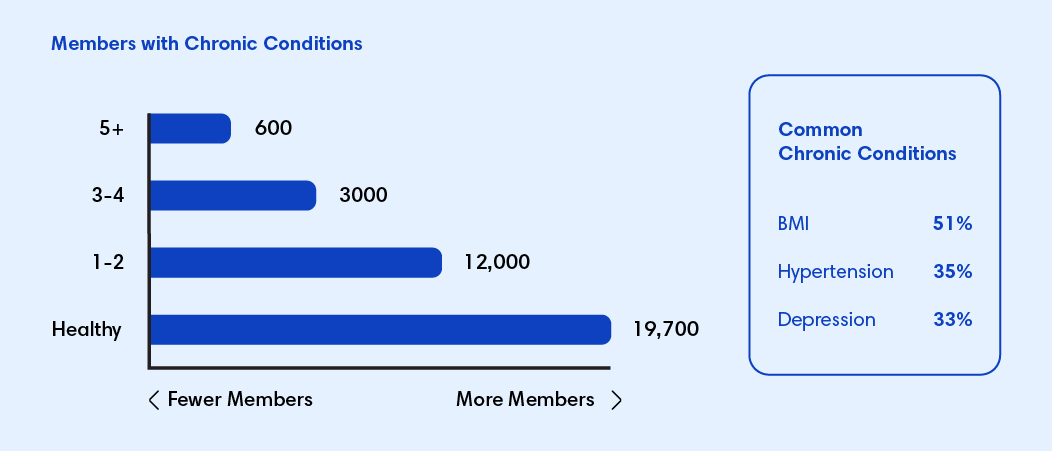
Artemis and Mohawk worked together to determine the size and scope of the chronic condition population. We created cohorts (member groupings) of those with diagnoses for thirteen common chronic conditions and compared medical claims and Rx data to determine which members met our criteria. Additionally, we created a cohort of health members without chronic conditions diagnoses. We used this data to build a heat map of members with five, four, three, two, and one chronic condition.
The data indicated some interesting findings
The Domino Effect
With nearly half of their member population experiencing one or more chronic conditions, it is important that clinical resources are deployed wisely. And the data made it clear that chronic conditions often do not exist in isolation—as conditions stacked, so did utilization, complexity, and cost. If a member facing comorbid conditions were having trouble navigating fragmented care, had inconsistent treatment plans, or preventable escalations, that was surely impacting not only their health, but ability to stay productive at work.
The Action Plan
Artemis collaborated with Mohawk’s clinical staff, doctors, physician assistants and nurse practitioners at their clinics, to offer better care and support to these members. We shared de-identified data with the clinicians with three goals in mind:
- They can reach out to members with targeted communications
- They can better coordinate care across clinics and with specialists
- They can help with preventive care and condition monitoring to impact these members’ health outcomes and costs.
The Outcome
Over the next two years, Mohawk and Artemis will continue to analyze data for these cohorts and measure the impact of initiatives implemented for these members.
The Takeaway
Better chronic condition management doesn’t necessarily start with another program. It starts with understanding your population at a deeper level and enabling the people closest to members to act on that insight. By using data to reveal the full clinical picture, Mohawk was able to move from surface-level prevalence metrics to taking informed, targeted action.