
Beyond the Claims: Using Contextual Data to Reveal the True Cost of Employee Stress
Claims data can show you where dollars are going, but it rarely explains why. When one employer noticed signs of rising stress among a group of client-facing employees, they partnered with Artemis to look beyond medical claims and incorporate contextual workforce data to understand the full employee experience. In this case study, you’ll see how integrating non-claims data revealed hidden stress, its impact on cost and productivity, and where targeted action could make the biggest difference.
Read on to:
- See how nontraditional data sources filled in the gaps claims data couldn’t
- Understand how employee stress translated into higher medical spend, Rx use, and time away from work
- Learn how connecting contextual data enabled more informed, proactive interventions

Overview
A leading provider of enterprise software services began hearing concerns from senior leadership about rising stress levels among a group of client-facing employees. These roles had grown more demanding over time, and leadership worried stress might be contributing to higher turnover, increased leaves of absence, and declining performance compared to behind-the-scenes teams.
Rather than guessing at the root cause or relying on anecdotal feedback, the organization partnered with Artemis Health to understand what was really happening and whether stress was impacting costs, productivity, and the employee experience.
The Discovery
To paint a holistic picture of our client’s population, we had to cast a wider net beyond the traditional claims and Rx detail. We integrated a broad set of data sources, including medical, Rx, dental, vision, HRIS, biometrics, disability, leave of absence, and survey data from a Health Risk Assessment employees filled out. Using the Artemis Platform, the team created a trackable cohort of these client-facing employees.
What emerged was a clear signal:
Key findings:
- 32% of employees in the cohort reported high stress
- 61% reported moderate stress
- Only 6.7% reported low or no stress
- The most commonly cited stressor was job responsibilities, reported by roughly 20% of the group
Leaderships’ concerns around employee stress were immediately validated.
.png)
The Domino Effect
The next logical step in the analysis was to evaluate the impact of employee stress, which was also plain to see once Artemis connected stress data with claims, pharmacy, and leave information.
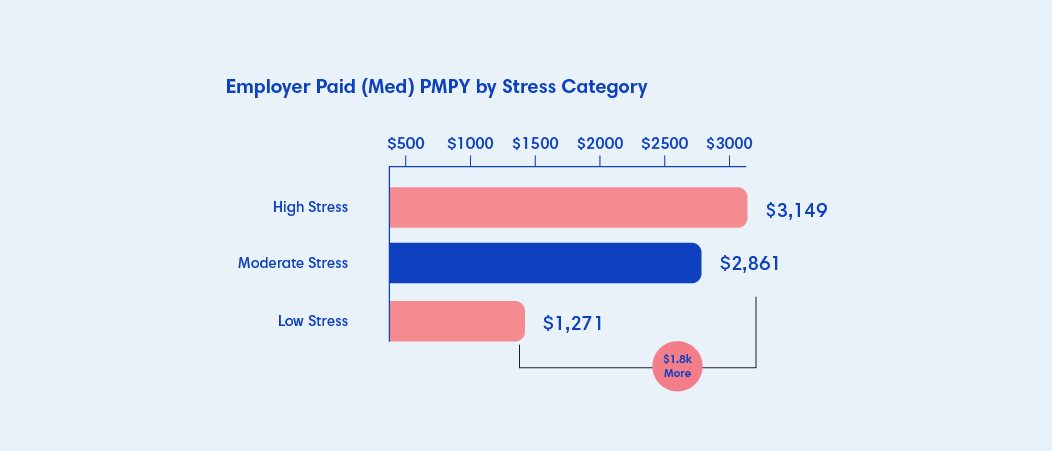
We found that:
- High-stress employees incurred $1,878 more in medical costs per member per year compared to non-stressed colleagues
- High-stress employees were prescribed anti-depressants and opioids at higher rates, driving additional Rx costs
- These employees used nearly double the leave days and leave hours per year compared to non-stressed peers
Stress was quietly increasing healthcare spend, reducing productivity, and straining the organization operationally.
The Action Plan
Armed with these insights, the client took a multi-faceted approach to addressing stress at both the individual and organizational level.
Key actions included:
- Adjustments to the work environment to reduce role-related strain
- New resilience and mindfulness programs to support mental health
- Additional resources and support for employees during times of need
Artemis helped ensure these actions were grounded in data—not assumptions—and aligned to the specific drivers uncovered in the analysis.
The Outcome
Rather than treating these initiatives as one-off wellness programs, Artemis worked with the client to make outcomes measurable.
Ongoing efforts include:
- Integrating new data sources tied to program participation
- Establishing KPIs around cost, risk, productivity, and quality of life
- Using Match Pair Cohorts analyses to track at-risk employees and compare outcomes over time
This approach allows the client to continuously evaluate whether interventions are working (and course-correct when needed).
The Takeaway
Employee stress is just one example of how hidden human factors show up—very clearly—in healthcare costs, leave patterns, and productivity when employers have the right data. It is important to look beyond traditional sources of “healthcare” data (things like SDoH, leave and disability, and even pet insurance) to have a more complete view of an employee’s experience, which can in turn predict workforce outcomes.